
*
100% Virtual
*
Food and Body Image Support
*
Clinically Guided Reset
* 100% Virtual * Food and Body Image Support * Clinically Guided Reset
Eating Disorders 101
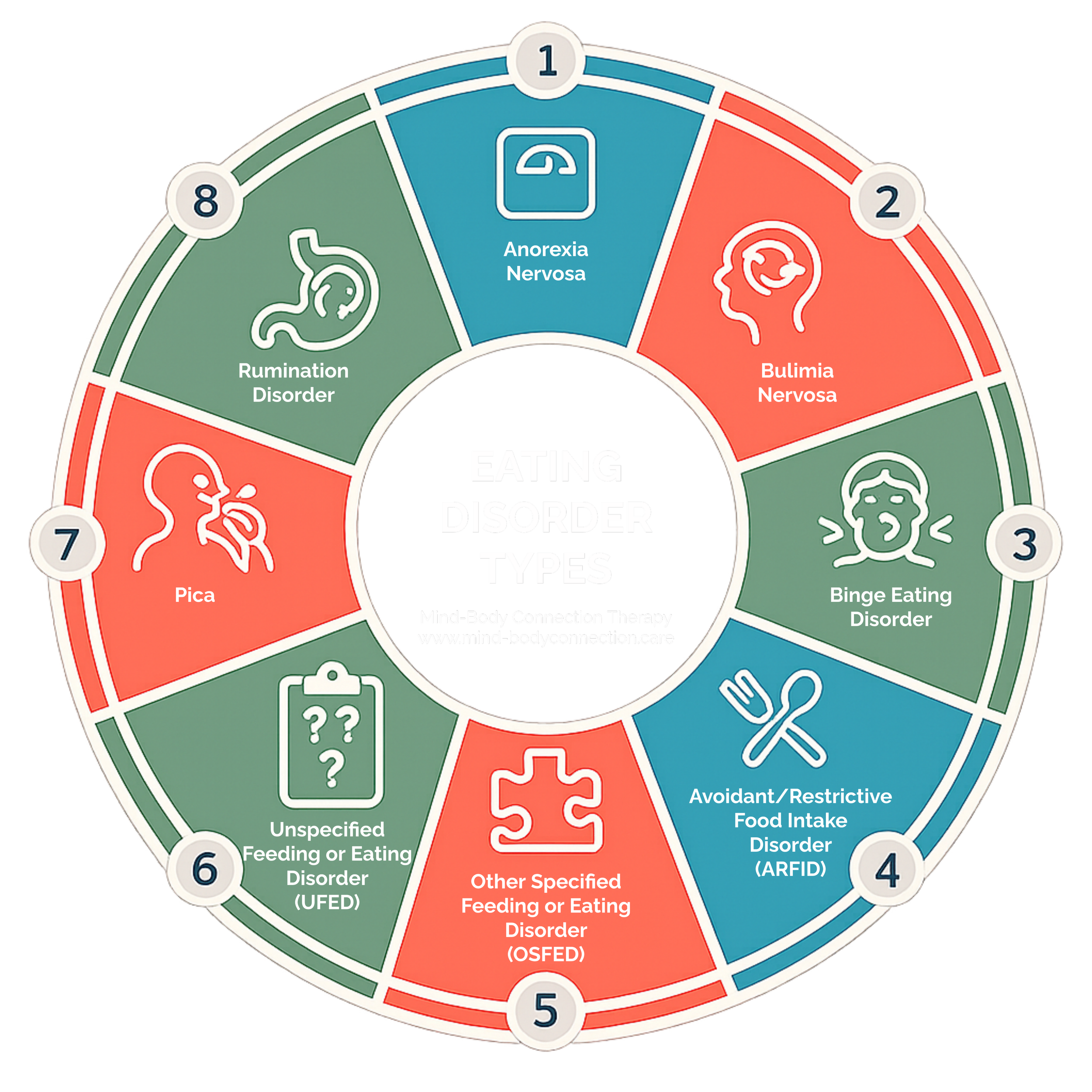
An eating disorder is a type of mental health condition where a person has unhealthy patterns of eating and a strong focus on food, body weight, or body shape that can harm their physical health and emotional well-being. These disorders are more than just dieting or occasional overeating—they involve serious and persistent behaviors.*
According to the Diagnostic and Statistical Manual of Mental Disorders (5th ed.), referred to as the DSM-5, there are eight clinically recognized eating and feeding disorders.
-
Severe restricting due to intense fear of weight gain, and distorted body image leading to low body weight. Restricting includes under eating, over exercising, and/or purging food through vomiting or laxatives.
-
Cycles of binge eating followed by compensatory behaviors such as vomiting, laxatives, or excessive exercise.
-
Recurrent episodes of overeating with a loss of control, often followed by guilt, shame, or distress.
-
Avoidance or restriction of food due to apathy towards food, texture of food, or fear of vomiting leading to nutritional deficiency, weight loss, or reliance on supplements.
-
Persistent eating of non-food items (e.g., dirt, paper) that is not age-appropriate or culturally typical.
-
Repeated regurgitation of food after eating, which may be re-chewed, swallowed, or spit out.
When eating behaviors cause significant distress or impairment but do not perfectly align with the strict diagnostic criteria for things like Anorexia or Bulimia, they are still clinically recognized and taken seriously.
In the DSM-5, these usually fall under two "catch-all" categories, but there are also well-known patterns recognized by the medical community that have not been given their own formal entry yet.
-
Disordered eating patterns causing distress or impairment that don’t fully meet criteria for a specific diagnosis. This is actually one of the most common diagnoses. It is not a "milder" version of an eating disorder; it simply means the symptoms are atypical.
Examples include:
Atypical Anorexia Nervosa: All criteria for Anorexia are met, but the individual’s weight remains within or above the "normal" range despite significant weight loss.
Bulimia Nervosa (of low frequency/limited duration): Binge and purge cycles happen less than once a week or for less than three months.
Purging Disorder: Purging behavior (vomiting, misuse of laxatives) to influence weight or shape, but without binge eating.
Night Eating Syndrome: Recurring episodes of eating after awakening from sleep or excessive food consumption after the evening meal.
-
Clinically significant eating symptoms that are not fully specified but still impact functioning and well-being. This category is used when a clinician observes symptoms of an eating disorder that cause distress, but there is not enough information to make a more specific diagnosis.
There are several patterns of disordered eating that are widely discussed by specialists and the public but are not yet official standalone diagnoses in the DSM-5.
-
An obsession with "pure" or "clean" eating. Unlike Anorexia, the focus is often on the quality of food rather than the quantity or weight loss, though it can lead to severe malnutrition and social isolation.
-
Often seen as a subtype of Body Dysmorphic Disorder, this involves an obsession with muscle mass and "leanness," often leading to rigid dieting, excessive protein consumption, and over-exercising.
-
This refers to individuals with Type 1 Diabetes who deliberately withhold insulin to lose weight. While not a DSM-5 entry, it is a life-threatening disordered behavior.
-
While "Behavioral Addictions" exist in the DSM (like gambling), food addiction is still a highly debated topic in the scientific community regarding whether it functions like a substance use disorder.
-
A type of disordered eating pattern where an athlete over-exercises and restricts food intake to control weight or improve performance, often in an unhealthy way.

RESOURCES

*The content provided on the Mind-Body Connection website is for informational purposes only and does not constitute medical or mental health advice.